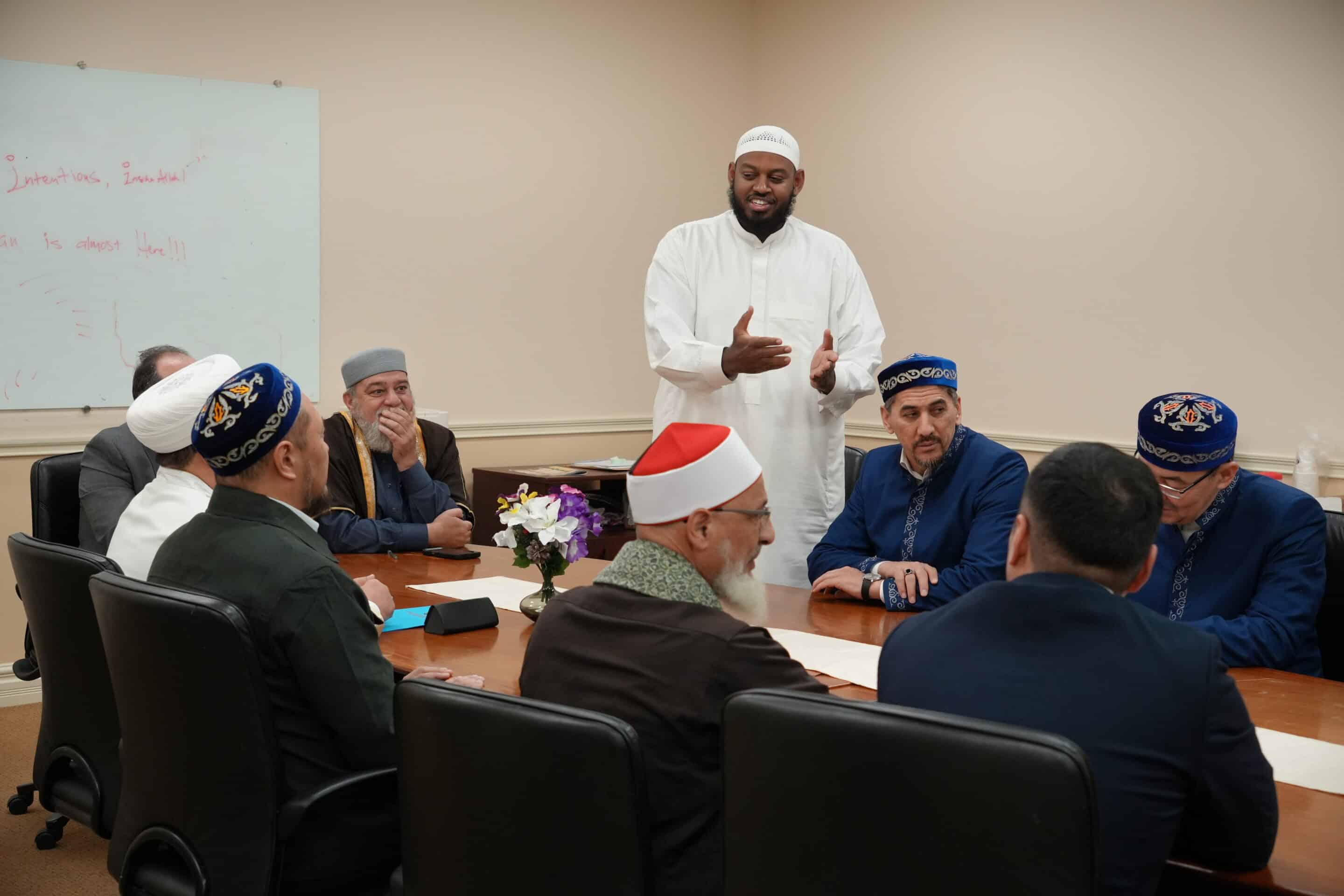


It’s amusing that sources attribute Islam’s status as the fastest growing religion to its exceptionally high fertility rate, but it’s also a little reductive. The Muslim community “emerges as the most converted religion in the word” (Saber). Thus, it’s imperative that we are able to create the most welcoming and nurturing environment for the reverts that join us. Last December 2024, Imam Tahir Anwar gave an essential lecture that addressed some problematic behaviors within Muslim communities and the correct approaches to interacting and engaging with new Muslims.
As born-Muslims, many of us have picked up a decent amount of fiqh we use in our daily lives and it’s natural to feel eager to teach all this to new reverts too. But for someone who has just been introduced to Islam, the intricate jurisprudence can be overwhelming and set up unrealistic expectations. As Imam Tahir put it, “you can not learn or teach everything about Islam overnight”. Rather, it’s best to focus on the crucial, foundational values of Islam, such as the five pillars (the testimony of faith, daily prayers, zakat, fasting during Ramadan, and Hajj).
Imam Tahir emphasized that we shouldn’t adopt the teacher-student dynamic in our interactions with new Muslims; we should be trying to build genuine friendships built on your common faith. Approaching them with a sense of humility is absolutely imperative. Imam Tahir shared that he has “learned more about life, situations, and challenges from new Muslims than they have learned from me, hands down.” Reverts aren’t open books or blank slates; they come with their own experiences and insights which can actually enrich our own understanding of Islam.
On a similar note, it should be understood that people may come to slam in a variety of ways. So if there’s one thing Imam Tahir wanted us to take away from the lecture, it was the word “nuance”. Because every revert’s story is unique, not all of them will learn Islam in the same manner. For instance, Imam Tahir shares the story of a Mexican-American man who had been learning about Islam with him for some time. He eventually professed that he was truly convinced by the message of Islam and wanted to convert. There was just one problem. He loved bacon. He really, really loved bacon. In his own words, his life just felt “incomplete without bacon.” So he didn’t want to be a Muslim while eating pork. The imam advised him to convert to Islam anyways. His reasoning was that while a major sin like consuming pork is forbidden, the essence of Tawheed (the Oneness of God), which this young man had grasped, was far more important. While some may consider this take to be problematic, it was this nuanced and compassionate advice that led him to embrace and develop a sincere connection with Islam. And within a matter of a few months, he had completely quit eating bacon.
Remember that many people who revert have lived entire lives outside of Islam; adjusting to an Islamic way of life will take them time. Try to focus on the bigger picture, which is supporting embracing a new Muslim’s journey, without nitpicking smaller mistakes.

 WhatsApp
 Facebook